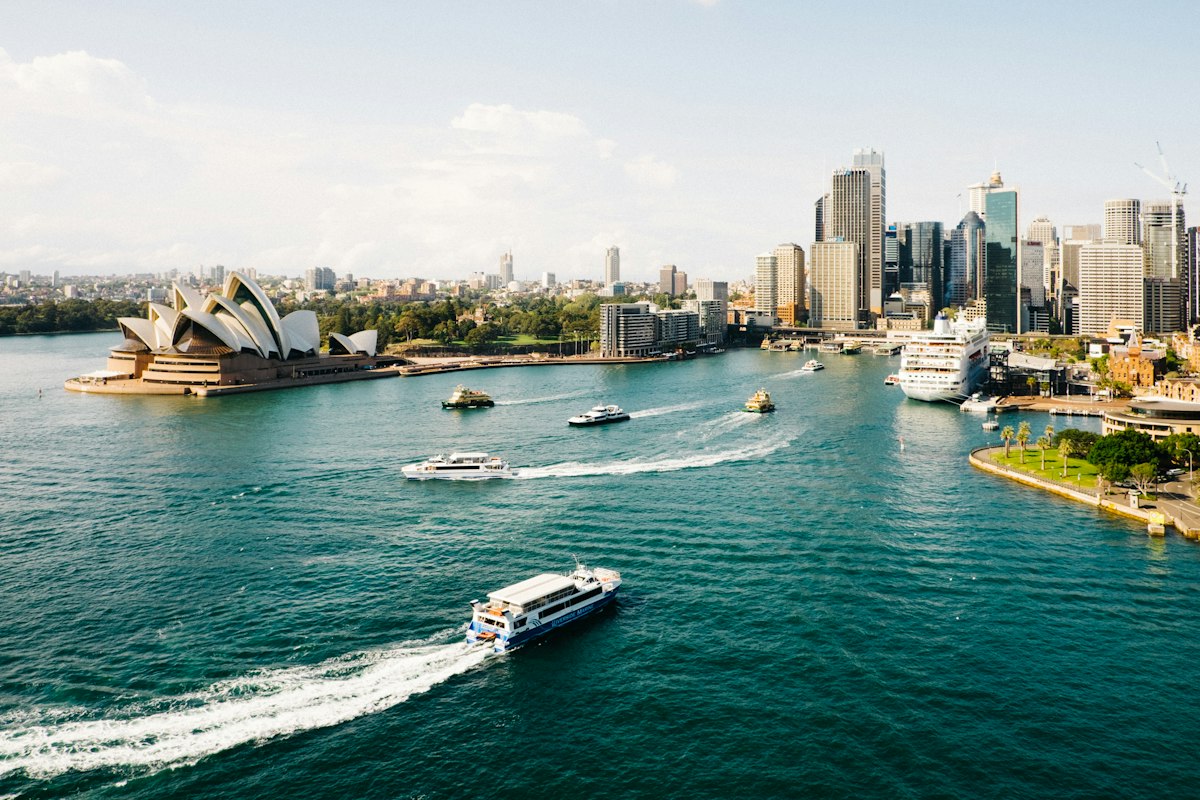
The story of Australian healthcare is not the story most Australians grew up believing. Medicare remains one of the most important institutions in the country, but public hospital elective surgery waits now run to twelve months or longer in most states. Private care, available to those with insurance or savings, fills some of the gap but costs significantly more than equivalent care in many other countries.
For Australians facing a waiting list — for an MRI, a specialist consultation, a diagnostic procedure, or elective surgery — the options are narrower than they should be. Beijing is increasingly becoming a third option, particularly for diagnostic work and specialist second opinions where the time cost of waiting is real and the financial cost of private care in Australia is significant.
The Flight from Sydney Is Shorter Than You Think
Sydney to Beijing is approximately eleven hours direct — shorter than Sydney to London, and comparable to Sydney to most of Europe. Direct flights operate daily from Sydney and Melbourne, with additional options from Brisbane and Perth via single connections. Flight costs have normalised post-pandemic, with return economy fares typically running AUD 1,200 to 2,000 depending on season and booking window.
The time zone difference is manageable. Beijing is two hours behind Sydney (three during Australian daylight saving), which means minimal jet lag for patients travelling from the east coast and very manageable adjustment from Western Australia.
The Wait Time Reality in Australia
Public MRI waiting times in Australia vary significantly by state and condition. Non-urgent imaging can wait eight to sixteen weeks in most public systems. Elective surgery waits — for conditions like hip replacement, cataract surgery, or spinal procedures — commonly run nine to eighteen months, with some regions reporting waits of over two years.
Private care fills part of the gap but at significant cost. A single private MRI in Australia runs AUD 400 to 800 before Medicare rebate, with the out-of-pocket cost typically AUD 200 to 500 depending on the procedure. Specialist consultations without full Medicare coverage run AUD 200 to 400. Private elective surgery varies enormously but typically runs tens of thousands of dollars for common procedures.
For Australians who don't have private health insurance — roughly half the population — the options for faster care within Australia are limited.
What Beijing Offers Australian Patients
The primary proposition for Australian patients is the same as for British and Canadian patients: compressed diagnostic timelines, senior specialist access, and significantly lower costs than Australian private care. The specifics vary slightly given differences between healthcare systems, but the underlying logic is consistent.
An MRI that costs AUD 400 to 800 in Australian private imaging runs approximately AUD 400 to 600 at a Beijing Grade 3A hospital — similar on raw cost, but with same-day or next-day availability rather than the wait that often accompanies Australian private imaging outside major cities.
A senior specialist consultation in Beijing costs approximately AUD 120 to 300 depending on the specialist's seniority and hospital — typically lower than Australian private specialist consultations, and with access to department heads who have case experience that matches or exceeds their Australian equivalents, particularly in areas where Beijing's major hospitals have nationally-ranked departments.
For more comprehensive workups — multiple imaging modalities, specialist consultations across disciplines, full diagnostic assessment — the cost gap widens. A comprehensive Beijing diagnostic visit typically runs AUD 1,500 to 3,500 total, compared to AUD 3,000 to 8,000 for equivalent private care in Australia spread across the weeks or months needed to coordinate it.
The Visa Situation for Australians
Australian passport holders qualify for China's 144-hour and 240-hour visa-free transit policies, both of which cover Beijing as an entry point. For most medical trips — ranging from three to ten days — no pre-arranged visa is required. The onward flight requirement of the transit policy is easily met with a return ticket booked through a third destination, with Hong Kong being a common option for Australian travellers.
For visits that need to exceed ten days, a standard Chinese tourist visa is straightforward to obtain through the Chinese consulates in Sydney, Melbourne, and Perth, typically processed in four to six business days.
What Australians Commonly Come For
Diagnostic imaging is the most common reason Australian patients visit Beijing — particularly MRI for spinal conditions, neurological concerns, and complex orthopaedic presentations. The combination of Australian public system delays and the premium pricing of Australian private imaging makes Beijing particularly attractive for patients who need imaging quickly without paying Australian private rates.
Second opinion consultations are the other major category. Australian patients with significant diagnoses — oncological, neurological, cardiac — increasingly seek a review by a senior Beijing specialist to either confirm or challenge the initial diagnosis before committing to a treatment plan. The time cost of obtaining a second opinion within the Australian system is often the deciding factor in choosing to travel.
Dental work is also a common reason for Australian visits, particularly for patients facing major restorative or implant work where Australian costs are among the highest in the developed world. A Beijing dental trip combined with two or three days of sightseeing often costs less than the equivalent procedures in Australia.
Insurance Considerations for Australian Patients
Australian private health insurance typically does not cover care received overseas for planned medical visits. This differs from travel insurance, which covers emergency care but not elective medical travel. Patients should plan to pay Beijing medical costs directly and pursue any reimbursement with their insurer based on the specific policy terms.
Some Australian private health funds offer specific international health policies that do cover planned medical care overseas, but these are niche products. For most Australians, the practical approach is to pay directly and treat the Beijing trip as a standalone medical expense, with any potential claim treated as an unexpected bonus rather than an expected recovery.
Bringing Records Back to Australia
One of the most practical advantages of a Beijing medical visit is that all results — imaging files, pathology reports, specialist consultations — can be taken back to Australia in a format your local doctors can use. DICOM-format imaging files on USB drive, PDF reports in English, and a written summary of findings all integrate smoothly into Australian medical records systems.
For continuity of care with Australian treating doctors, ensuring your Beijing specialist consultation produces a clear written report is the most important single factor. Beijing's international department specialists are accustomed to producing reports suitable for foreign healthcare systems, including Australian.
Planning an Australian Medical Visit to Beijing
The logistics of a Beijing medical visit from Australia are straightforward once the main decisions — which hospital, which specialist, what timeline, what tests — are made. Where the complexity lies is in those decisions themselves, which benefit significantly from local knowledge of Beijing's hospital system.
If you are an Australian patient considering a Beijing medical visit and want to understand what your specific situation would involve, reach out to us here. We work with patients across Australia and can coordinate everything from initial medical assessment through to results in English delivered to your local treating team.