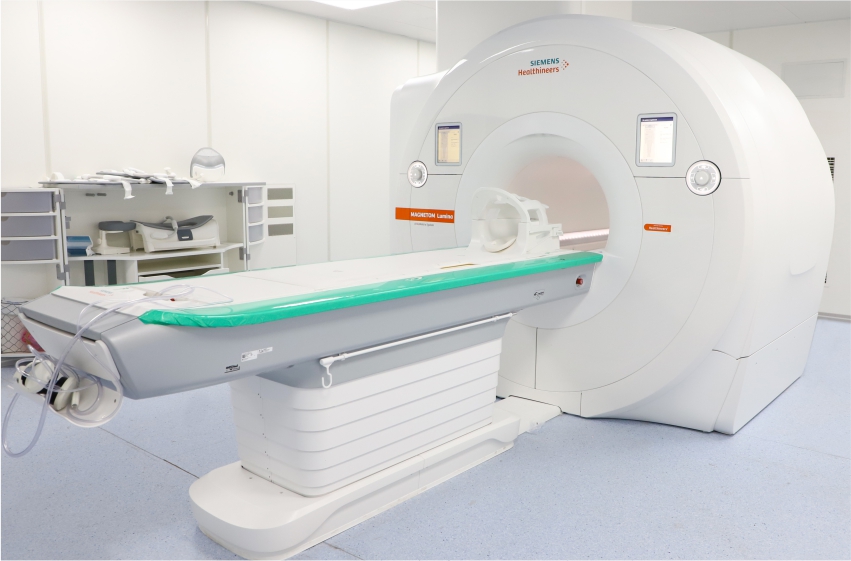
Ben and Reanne are a British couple from Portsmouth who sold their house, quit their jobs, and started travelling the world full time. In February 2026, they found themselves in Shenzhen, China — and decided to walk into one of the city's hospitals for a brain MRI.
Not because something was wrong. Out of curiosity. And because the price made it worth finding out.
What they found inside surprised them enough to film the entire experience. Their video, published in February 2026, has been watched nearly 37,000 times in its first week.
Watch: A Full Brain MRI in a Chinese Hospital
Ben documents the entire process — from walking into the hospital, to the scanning technology, to the final cost. For anyone who has ever sat on an NHS imaging waiting list, this is worth watching:
Ben and Reanne document their MRI experience in Shenzhen, China — On Tour With Dridgers, February 2026
Why Would Someone Get an MRI in China?
For most people in the UK, Canada, or Australia, the answer starts with a waiting list. NHS MRI waits regularly stretch to 3–6 months for non-emergency cases. In Canada, the median wait for an MRI is over 100 days in most provinces. In Australia, public imaging queues can run similarly long.
Private MRI in the UK costs between £500 and £1,500 depending on the scan type and clinic. In the US, without insurance, a single MRI can run $1,500 to $5,000.
In China's top public hospitals, the same scan — on equipment that is often newer — typically costs 2,000 to 3,500 RMB. That is roughly £220 to £380. Results are available within 24 to 48 hours.
What the Technology Actually Looks Like
One of the most consistent surprises foreigners report when visiting Chinese hospitals is the equipment. China has invested heavily in medical infrastructure over the past decade, and its top-tier hospitals — Grade 3A, the highest classification in the national system — regularly operate 3.0 Tesla MRI machines, the same standard used in leading Western hospitals.
Shenzhen, where Ben and Reanne visited, is one of China's fastest-growing cities and has built its hospital infrastructure accordingly. The facilities they documented reflect what has become standard at China's better urban hospitals: modern, clean, digitally integrated, and operating at high efficiency.
"The technology, and what surprised me most" — Ben's words in the video — capture what many first-time visitors to Chinese hospitals experience. The gap between expectation and reality is significant.
The Process as a Foreigner
Walking into a Chinese public hospital without Mandarin is genuinely challenging. The registration systems, queue management, and most staff interactions are in Chinese. For a walk-in experience like Ben and Reanne's, having a translation app and some patience is essential.
For patients who are travelling specifically for medical care rather than documenting a travel vlog, the more practical route is through a hospital's international department. Beijing's major hospitals — PUMCH, Xuanwu, Tiantan, and Beijing Tsinghua Changgung — all operate dedicated international medical divisions with English-speaking coordinators who manage the entire process from appointment booking through to results.
The difference between walking in off the street and going through an international department is significant: the latter involves confirmed appointments, English communication throughout, and a clear process for getting results in a format usable by doctors back home.
What Beijing Offers That Shenzhen Doesn't
Shenzhen is impressive for its modernity and infrastructure. Beijing is the stronger choice for patients with specific medical needs, for one simple reason: specialist concentration.
Beijing is home to China's highest density of Grade 3A hospitals, including institutions that are nationally ranked for neurology, oncology, orthopaedics, and cardiology. For a brain MRI specifically, hospitals like Xuanwu and Tiantan have neurology departments that handle case volumes most Western hospitals never approach. The depth of specialist expertise available for follow-up consultations after imaging is unmatched in China outside of Beijing and Shanghai.
For patients who need not just an image but an interpretation — a specialist review, a second opinion, a treatment recommendation — Beijing is where that conversation happens at the highest level.
The 240-Hour Window
Citizens of 55 countries can enter China under the visa-free transit policy, which allows up to 10 days without pre-arranging a visa. For most diagnostic imaging trips — an MRI, a CT scan, a specialist consultation — that window is sufficient. Results from Beijing's international departments are typically ready within 48 hours, with follow-up consultation available before departure.
Many patients combine the medical visit with a few days of sightseeing. Beijing has enough to fill a week without trying. The medical trip and the travel experience are not mutually exclusive.
If You're on a Waiting List Right Now
Ben and Reanne went to a Chinese hospital out of curiosity. Most people reading this are here because they have been waiting — for an MRI referral, a specialist appointment, a scan that keeps getting pushed back.
If that describes your situation, the question is straightforward: is there a faster, more affordable path to the information you need? For a growing number of people from the UK, Canada, and Australia, Beijing is that path.
We help patients navigate Beijing's hospital system from start to finish — appointment booking, translation, specialist coordination, and results in English. If you want to understand what your options look like, reach out to us here.