The comments under videos about Traditional Chinese Medicine follow a predictable pattern. People who have tried it describe chronic pain disappearing after years of failed Western treatments. People who haven't tried it are skeptical. And somewhere in the middle are the thousands of foreigners who visit China every year and decide, out of curiosity or necessity, to find out for themselves.
TCM — acupuncture, herbal medicine, cupping, tuina massage, pulse diagnosis — is not an alternative to China's modern hospital system. It sits alongside it, often within the same hospital building. Shanghai's Yueyang Hospital, one of the most respected TCM institutions in China, operates both a modern diagnostic facility and a full TCM clinical department. Foreigners visit both.
Watch: A Foreigner's TCM Experience in China
A firsthand TCM experience at a Chinese hospital — acupuncture, herbal medicine and pulse diagnosis.
What Actually Happens During a TCM Consultation
A TCM consultation looks nothing like a Western GP appointment. The doctor begins with pulse diagnosis — feeling multiple points on each wrist to assess what TCM theory describes as the flow of qi through different organ systems. This is followed by tongue examination, a detailed discussion of symptoms, sleep patterns, digestion, and emotional state, and a physical assessment of any specific areas of concern.
The consultation is unhurried by Western standards. TCM practitioners typically spend twenty to forty minutes with a patient in an initial consultation. The outcome is a diagnosis expressed in TCM terms — patterns of excess or deficiency, heat or cold, stagnation — and a treatment plan that might include acupuncture, a customised herbal formula, dietary recommendations, or a combination.
Acupuncture: What It Feels Like
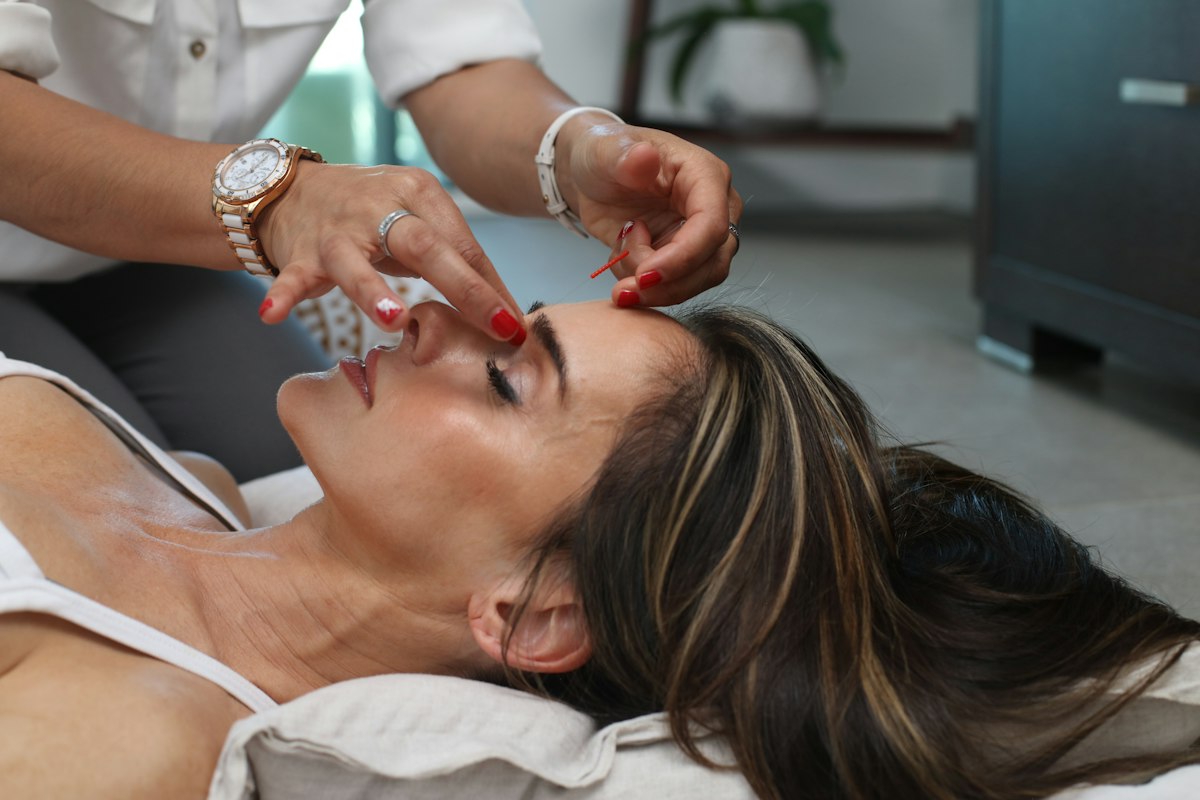
The most common concern first-time patients raise is pain. The needles used in acupuncture are considerably finer than those used for injections or blood draws — closer to a thick hair than a needle in the conventional sense. Most patients describe the sensation as a dull pressure or a mild ache at the insertion point, not pain. Some points produce a stronger sensation than others.
Once the needles are placed, most patients lie still for twenty to thirty minutes. Many fall asleep. The experience is, for most people, considerably less dramatic than anticipated.
The Evidence Question
TCM sits in a complicated evidential position. Some components — acupuncture for chronic pain and certain types of headache, artemisinin derived from traditional herbal knowledge for malaria — have strong clinical support. Tu Youyou's Nobel Prize-winning discovery of artemisinin, drawn directly from traditional Chinese pharmacology, is the most celebrated example of TCM knowledge producing a verified medical breakthrough.
Other aspects of TCM remain contested in Western clinical literature. The honest position is that the evidence base is uneven — strong for some applications, limited for others, and complicated by the difficulty of applying Western clinical trial methodology to a system built on individualised treatment rather than standardised protocols.
What is clear is that TCM has a two-thousand-year clinical history, an enormous practitioner base, and a growing body of patients — including Western patients — who report significant benefit for conditions that Western medicine had not successfully treated. That does not constitute proof, but it is not nothing either.
TCM in Beijing
Beijing is home to some of China's most respected TCM institutions, including the China Academy of Chinese Medical Sciences and Dongzhimen Hospital, Beijing University of Chinese Medicine. These institutions combine classical TCM practice with modern research and diagnostic facilities — meaning a TCM consultation can be informed by Western diagnostic imaging if needed, and vice versa.
For visitors interested in exploring TCM as part of a Beijing medical visit — whether for a specific condition, chronic pain, or simply curiosity — we can arrange consultations at Beijing's top TCM hospitals through English-speaking coordinators. If you want to understand what a TCM consultation would involve for your specific situation, reach out to us here.